About the Institute of Clinical Anatomy and Cell Analysis of the Eberhard Karls Universität, University of Tübingen
The Eberhard Karls Universität (University of Tübingen), located at the heart of Baden-Württemberg, was founded in 1477 and is one of the oldest universities in Europe. The Institute of Clinical Anatomy and Cell Analysis is part of the anatomy department of the faculty of medicine and has been conducting a wide range of anatomical research and teaching projects in Stackfield since 2017. Prof. Dr. Bernhard Hirt is an anatomist, doctor for otorhinolaryngology and head and neck surgery, the institute's director, and chair holder of the Chair for Clinical Anatomy.
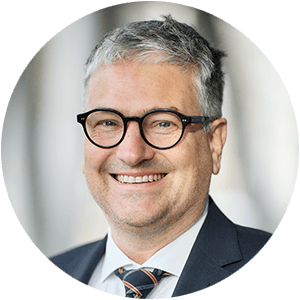
Prof. Dr. Bernhard Hirt – Institute Director
The initial situation: fast-paced e-mail traffic and analog project work
At the Chair for Clinical Anatomy at the University of Tübingen, a multitude of topics and projects have to be dealt with in parallel every day. Administrative tasks such as the purchase of chemicals or the central storage of work instructions and rules create a framework for working at the institute and must be carried out transparently and reliably. Different research groups must be able to discuss lab- or project-specific content, and PhD students must be informed and administered accordingly. Content-related networking is also necessary across working groups, as functional areas such as microscopy or cell biology are handled by people from different departments. In addition, a so-called “profit center” has been established at the institute, where various research and development activities are coordinated with medical technology companies and media technology events are organized and carried out – this also involves a high level of administrative and organizational effort.
Before a solution was introduced in 2017 to manage relevant topics centrally, content at the institute was discussed in person or via email. As a result, transparency within and between teams suffered; there was no single point of truth where all information could be gathered. “The whole thing was always a bit confusing, so people preferred to meet face-to-face in meetings, lab discussions, or journal clubs,” says Prof. Dr. Hirt.
Data security as a driving factor
In order to manage the various subsectors and implement the research work transparently within and across teams, the decision was made to introduce a digital solution. In the search for a suitable tool, particular focus was placed on one aspect. Prof. Dr. Hirt explains: “Of course, we were familiar with various project management tools that allow topic-specific interaction in individual rooms or on individual cards, and US solutions were already very prominent at that time. However, the issue of data security remained a constant concern.” As a public institution, data protection was a top priority for the institute, who therefore could not and would not rely on a solution that had shortcomings in this area. A search driven by data protection requirements led to Stackfield. As a Munich-based tool with data processing on EU servers, multiple ISO certifications, the C5 certificate from the German Federal Office for Information Security (BSI), and true end-to-end encryption, Stackfield offers data protection that goes beyond GDPR compliance and was thus identified by the institute as the “ideal tool.”
Introducing Stackfield to the Chair
Once the decision was made to go with Stackfield, the solution was first introduced within the department administration to cover topics ranging from pharmacy orders to collaboration rules. In a second step, the research groups were to be familiarized with the platform as well as digital project management practices. This was achieved through a project called “GO-Bio,” funded by the Federal Ministry of Education and Research (BMBF, now: BMFTR).
BMBF-funded project “GO-Bio”: project-based collaboration
The “GO-Bio” project of the Institute of Clinical Anatomy and Cell Analysis received funding from the BMBF to bring a substitute for formaldehyde developed by the corresponding research group to market maturity. Formaldehyde has been used in pathology, anatomy, and the funeral industry to preserve tissue, organs, and even entire bodies, but has proven to be extremely toxic and carcinogenic, which is why the research group under Prof. Dr. Bernhard Hirt set itself the goal of developing a substitute substance with no health risks. As part of the research work, a substitute was successfully developed, for the completion of which the institute was able to obtain funding within the scope of the German Biotech Days 2018. Prof. Dr. Hirt explains: “In this project, a large number of scientists had to be coordinated with a higher amount of funding, and in a very translational manner. This means that the goal of this scientific activity is the establishment of a start-up company.” To accomplish the GO-Bio project, seven different working groups were formed to work on individual sub-areas in Stackfield and conduct their own molecular research. Thanks to the large scope and “translational nature” of the project, the scientists were able to be trained in the use of Stackfield in a practical and efficient manner.
Sectio chirurgica: live surgeries for students
One of the current major projects being organized on a large scale in Stackfield today (as of 2025) is Sectio chirurgica, which involves producing live broadcasts of simulated and real surgeries. For this purpose, an in-house television studio equipped with a real operating room has been set up at the institute. There, doctors from the medical faculty perform a wide variety of surgeries on model systems of the human body and body donors on a weekly basis. The individual broadcasts are produced using professional television technology in the form of individual episodes and subsequently made available via a media library, which can be accessed by more than 50,000 registered students throughout Germany. To date, more than 150 episodes, each lasting 60 to 90 minutes, have been produced in 21 seasons. In order to plan and implement the various episodes, large groups consisting of media technology specialists, doctors, and student assistants must be regularly assembled and coordinated, responsibilities defined, and deadlines set – “a complex process,” says Prof. Dr. Bernhard Hirt. Before Stackfield was deployed to support this process, the broadcasts were much more primitive, “with clipboards, a lot of fuss and numerous emails, and [...] not so elaborate and well produced,” recalls Prof. Dr. Hirt. "Now we work with large teams, lots of people, and very sophisticated technology in the background, which means that project planning is also more complex.”
Planning and organization of live broadcasts in Stackfield
Today, Stackfield is heavily involved in the planning and organization of live broadcasts—from scriptwriting and marketing to camera work. When a new episode is scheduled, a separate room is created in Stackfield. Then, everyone involved in the episode is added: the scriptwriting team, who work with the surgeons on the content, the marketing team, who keep registered students in the loop and organize lecture hall broadcasts, and other student assistants. Next, tasks are created in the room, including assignments, due dates, and subtasks to map out individual steps. This way, everyone on the team knows about responsibilities and the current status of the subproject at all times, and all work processes are transparent and visible in Stackfield. Additional episode-related communication can take place in the room as well, either directly in a task in the form of comments or on a more general level in the communication stream – “that's really valuable,” says Prof. Dr. Hirt.
“I can no longer imagine how [Sectio chirurgica] might function without a project management tool. Stackfield is very helpful here because we can now organize everything in a project-specific manner in various task cards and define subgroups and subtasks.”
In order to maintain an overview in Stackfield despite the increasing number of Sectio chirurgica productions, all current productions are placed in the sidebar in a higher-level room group titled “Sectio chirurgica Winter Term 2025/26.” This allows the individual subprojects to be classified at a glance. Rooms that are no longer needed are archived and thus disappear completely from the sidebar. Prof. Dr. Hirt sums it up: “Sectio chirurgica is ultimately a very modern, digitally driven teaching project.”
Management of student assistants via roles and rights groups
Not only in Sectio chirurgica, but in other projects as well, close cooperation with student assistants is taking place in Stackfield. With limited rights, student assistants are integrated into the tool as “guests.” This allows them to be added to rooms and collaborate on projects, while having limited access to functionalities outside of the rooms and not being able to view all members of the organization, following the need-to-know principle. Additional right groups are defined within the rooms so that student assistants cannot delete content, for example.
Work within individual working groups in the department: Stackfield as a valuable gadget
Via the implementation of projects such as GO-Bio and Sectio chirurgica, scientists at the institute are given a closer understanding of Stackfield. Prof. Dr. Hirt hopes that this will encourage the individual research groups to use it in their work. “You could say that we are inoculating the institute and all its employees, giving them the opportunity to use Stackfield in their own scientific work.” At the same time, he does not want to impose any specific requirements; the scientists should make a conscious decision to work with Stackfield. He explains: “Basic scientific research in an academic environment means that, ideally, you think incredibly freely and work very independently in small groups. Many scientists feel constrained when the whole thing is forced into a very tight framework.” Today, researchers decide how and whether Stackfield should be used to support their work, depending on the specific application. Stackfield can act as a support, especially in projects where the distribution of work and tasks are clearly defined – for example, when dealing with cell cultures: “Cells don't adhere to holidays, weekends, or the day-and-night rhythm,” emphasizes Prof. Dr. Hirt. Tasks must therefore be defined and completed at very clearly defined intervals. “Scientists now have something very valuable in their toolbox: Stackfield,” says Prof. Dr. Hirt.
Accessible support from Munich
For eight years now, the institute has been working with Stackfield. Part of the reason why this is such a positive experience is the Stackfield support team. “A company from Munich that is always available to answer questions and responds really quickly – I don't think that would be possible with other platforms,” says Prof. Dr. Hirt. In particular, the relaxed communication style appeals to him. Whenever there is a request or a problem, feedback is always provided and often an individual solution is offered. He praises: “It's simply a type of interaction that we are also familiar with in universities, this cooperation and directness, which makes it very pleasant.”
In the future, Prof. Dr. Hirt can also imagine using Stackfield in other areas, for example, to organize larger lectures.
“Stackfield is something we can now always pull out of our toolbox.”